
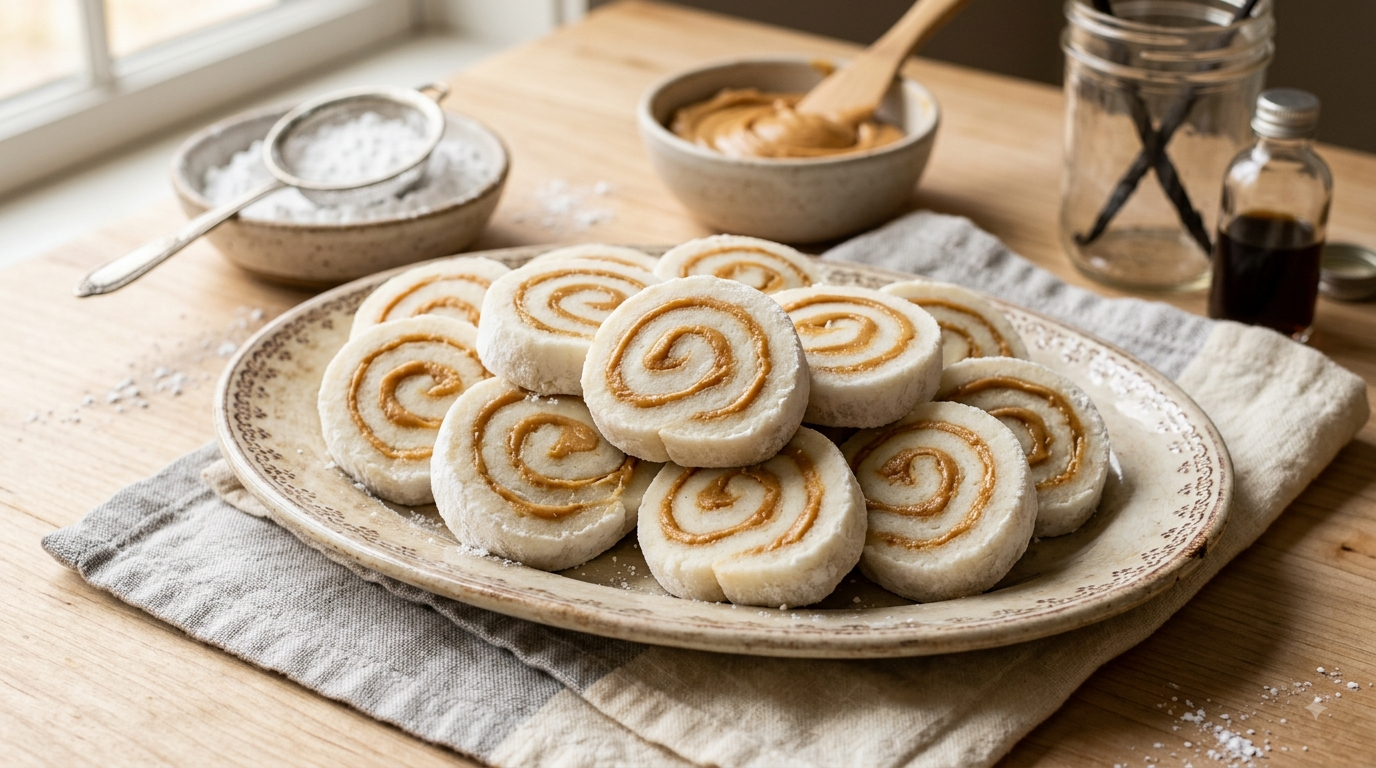
Old-Fashioned Potato Candy is the kind of kitchen magic that turns one humble scoop of potato into soft, snowy pinwheels with a creamy peanut butter swirl. It is sweet, nostalgic, and SO much prettier on a candy tray than its simple ingredients have any right to be! ✨
The potato does not make the candy taste savory, and there is no potato flavor waiting to surprise anybody. Its job is to help powdered sugar become a tender, rollable dough while butter and vanilla give every bite a smooth, almost frosting-like richness. The real secret is controlling moisture: use a fluffy russet, measure the cooked flesh precisely, and let it cool completely before it touches the butter or sugar. This version gives you the exact peanut butter amount the classic recipe needs, plus visual cues for knowing when the dough is ready. You will end with two tidy logs and about 40 little spirals ready for a holiday platter, candy exchange, shower dessert table, or a sweet afternoon treat. 🤍
The Sweet Heart of Old-Fashioned Potato Candy
This candy is proof that celebration food does not need a mile-long ingredient list to feel special. The white spiral against the golden peanut butter looks cheerful and graphic on a platter, while the bite itself is soft, rich, and unapologetically sweet. It has the cozy character of an old-fashioned confection without asking you to boil syrup, check a thermometer, or temper chocolate.
What makes this version worth keeping is its balance of tradition and reliability. It still begins with plain russet potato, butter, powdered sugar, vanilla, and peanut butter. The improvements simply close the little gaps that can make a classic handwritten recipe frustrating: the potato is measured after cooking, the filling has a real quantity, and the dough is judged by how it behaves instead of one rigid sugar number.
The finished pinwheels should feel tender and dense, rather like a soft buttercream candy. The vanilla rounds out the sweetness, and conventional creamy peanut butter adds a salty richness that keeps each slice from tasting one-note. The potato quietly disappears into the texture. Nobody gets a mouthful of mashed potatoes…promise! 😅
And then there is the presentation. Two compact logs become about 40 slices, so one batch fills a serving plate beautifully. Those neat spirals make the candy look detailed and festive even though the technique is simply roll, spread, curl, chill, and slice.
What Makes This Potato Candy Recipe Work
Russet potato is the best foundation because its flesh is fluffy and relatively dry. Red potatoes and other waxy varieties hold more moisture and can become dense or gluey when mashed. Cook the russet in its skin, scoop out the flesh, mash it smooth while it is still warm, and then measure exactly 1/2 cup, or 105 grams. That measured amount matters far more than the size of the potato you started with.
Salted butter gives the candy a richer, rounder flavor and keeps all that powdered sugar from tasting flat. It needs to be softened enough to blend smoothly but not shiny or melted. If the butter looks greasy, it is too warm; let it firm slightly before mixing.
Powdered sugar creates the body of the dough. Begin testing it once 6 cups have been mixed in, then add more only until a clean piece can be squeezed into a ball that holds its shape. Depending on the potato and the day, the dough may need the full 7 cups. The finished dough can feel faintly tacky before chilling, but it should not cling heavily to clean fingers or slump on the counter.
Pure vanilla softens the sharp edge of the sweetness, while conventional creamy peanut butter gives the most dependable filling. The smooth, stabilized kind spreads evenly and stays where you put it. Natural peanut butter that separates can make the layers slide, leak oil, or blur that pretty pinwheel.
Quick Substitution Guide
- Salted butter: Use unsalted butter and add a small pinch of fine salt.
- Conventional peanut butter: A smooth no-stir almond or sunflower seed butter can work, but the flavor will change and the filling may be softer.
- Pure vanilla: Imitation vanilla will still work, though the flavor is a little less rounded.
- Russet potato: Idaho baking potatoes are an equally good choice; avoid waxy red potatoes when possible.
Grab the free Profitable Crafts Starter Packet for practical ideas you can actually use, then come back and make something wonderful for your next celebration. Pretty food and smart presentation belong at the same table! 🤍
How to Make Old-Fashioned Potato Candy
Cook, Measure, and Cool the Potato
Prick a medium russet potato several times so steam can escape, then microwave it for 8 to 12 minutes, turning it halfway through. It is ready when a fork glides through the center without resistance. A potato that is merely tender at the edges still has a firm center, so check the thickest part.
Split the potato while it is warm enough to mash easily, scoop out the flesh, and work out every lump. A fork is fine; a potato ricer makes the job especially easy. Measure exactly 1/2 cup, or 105 grams, and spread it in a shallow layer so heat can escape. Let it cool uncovered at room temperature for at least 45 minutes. Touch the center, not just the surface: it should feel completely neutral, with no hidden warmth.
Mix the Dough Until It Holds Its Shape
Beat the cooled potato with the softened salted butter and 1 cup of powdered sugar on low speed. The mixture may look a little odd before it comes together; keep the mixer low, scrape the bowl, and let the sugar begin building the dough. Add the vanilla once the first mixture is even.
Continue with the powdered sugar 1 cup at a time. The dough will become heavier, and your mixer may need a rest as it stiffens. After 6 cups total, pinch off a small piece and roll it between clean fingers. If it smears or clings, add more sugar 2 tablespoons at a time. If it forms a smooth ball and keeps its shape, stop. More is not automatically better.
Flatten the dough into a thick disk, cover the bowl, and chill it for 45 minutes. Properly chilled dough feels cool and firm but bends when pressed. Dough that snaps at the edges has become too cold; 10 to 15 minutes at room temperature will bring it back to a friendly, rollable texture.
Roll and Fill the Two Logs
Divide the dough evenly and keep one half covered. Dust parchment, dough, and rolling pin generously with powdered sugar. Roll the first piece into an 8-by-12-inch rectangle about 1/4 inch thick. Lift the dough once or twice while rolling and add another whisper of sugar underneath before it sticks. Small edge cracks can be pressed together with your fingers.
Spread 1/4 cup creamy peanut butter over the rectangle in a thin, even layer, leaving a 1/2-inch bare strip along one long edge. Begin at the opposite long edge and use the parchment to guide the dough into a snug curl. Think firm and steady, not tight enough to squeeze out the filling. Press the bare edge gently against the log to seal it.
Wrap the finished log in parchment and chill it for 15 minutes while you repeat the process with the second half of dough and the remaining 1/4 cup peanut butter. That little pause firms the swirl without turning it brittle.
Slice the Pinwheels Cleanly
Use a sharp, thin-bladed knife and wipe it clean between cuts. Slice each log into 20 pieces, about 3/8 inch thick. A gentle sawing motion keeps the spiral round; pressing straight down with a dull knife can flatten it. Let the finished candy sit at room temperature for 5 to 10 minutes before serving if you prefer a softer, creamier bite.
Build a Beautiful Candy Table Around These Pinwheels
Old-Fashioned Potato Candy shines on a white or blush serving plate where the peanut butter spirals can do all the decorating. Arrange the slices in overlapping rings, then give the candy a little breathing room instead of crowding it between taller desserts. It suits Christmas candy trays, cookie exchanges, baby or bridal showers, vintage-themed celebrations, family gatherings, and sweet little afternoon coffee tables.
For a fuller dessert spread, pair the pinwheels with dark chocolate truffles, crisp butter cookies, or lightly salted pretzel clusters. Their bitterness, crunch, and salt balance the soft sweetness of the candy. Fresh strawberries or tart apple slices add a bright break between bites, while vanilla cupcakes or a simple chocolate sheet cake keep the menu familiar and crowd-friendly.
Serve it with hot coffee, unsweetened iced tea, cold milk, or a cocoa that is more chocolatey than sugary. For a party menu, add small savory bites such as cheese straws, roasted nuts, or mini sandwiches before dessert. That contrast makes the candy feel like the finale it deserves. 🎉
Inside Priey, the mentorship and AI mentor series help you shape the idea, while the Priey Design Studio helps you create matching printable menu cards and party pieces. Join free as a Subscriber, use the editor, and earn your way up as you build something unmistakably yours.
Potato Candy Variations Worth Trying
Chocolate Peanut Butter Pinwheels
Replace 2 tablespoons of the powdered sugar with unsweetened cocoa powder, sifting it into the dough with the first cup of sugar. The finished candy becomes gently chocolatey rather than brownie-dark, and the peanut butter still takes center stage. Add the remaining powdered sugar by feel because cocoa can make the dough slightly firmer.
Cinnamon Potato Candy
Skip the peanut butter, shape the firm dough into slim bite-size pieces, and roll them in 2 tablespoons of ground cinnamon. This is a stronger, warmer candy with no creamy center, so it feels like a true variation rather than the same pinwheel in another outfit.
Crunchy Peanut Butter Swirls
Use conventional crunchy peanut butter for tiny roasted-peanut bits throughout the spiral. Spread gently so the pieces do not drag or tear the dough. The slices will not look quite as perfectly smooth, but the extra texture is lovely.
Sunflower Butter Pinwheels
Use a smooth no-stir sunflower seed butter when you need a peanut-free option. Check every product label if allergies are involved, and expect a slightly earthier flavor and softer filling. Chill the logs a few extra minutes if the spiral feels loose.
Storage, Make-Ahead, and Freezing
Store the sliced candy in an airtight container in the refrigerator for up to 1 week. Place parchment between layers so the soft surfaces stay neat and the spirals do not stick together. The candy is delicious straight from the refrigerator, but 5 to 10 minutes at room temperature gives it a softer texture.
For make-ahead preparation, cook and cool the potato, mix the dough, shape both filled logs, and refrigerate them whole for up to 24 hours before slicing. Wrap each log first in parchment and then snugly in plastic wrap so the surface does not dry out. If a deeply chilled log feels brittle, let it stand for about 10 minutes before cutting.
Potato candy can be frozen for up to 2 months. Freeze the slices in a single layer until firm, then transfer them to a freezer-safe airtight container with parchment between layers. Thaw overnight in the refrigerator while the container remains closed; this keeps condensation from settling directly on the candy. Reheating is not needed and would melt or soften the pinwheels.
Sweet Ways to Use Leftover Old-Fashioned Potato Candy
Mini Candy Tray Accents
Cut leftover pinwheels in half and tuck them into open spaces on a cookie or chocolate tray. The visible spiral adds pattern and height without requiring another full batch of dessert.
Ice Cream Sundae Bites
Chop one or two chilled slices into small pieces and scatter them over vanilla or chocolate ice cream. Add roasted peanuts for crunch and a tiny pinch of flaky salt to balance the sweetness.
Edible Favor Boxes
Place three or four well-chilled slices in mini paper candy cups, then nestle them into a food-safe favor box. Keep the boxes refrigerated until close to serving or gifting so the pinwheels remain neat.
Old-Fashioned Potato Candy
Ingredients
Equipment
Method
- Prick a medium russet potato several times with a fork. Microwave it on a microwave-safe plate for 8-12 minutes, turning halfway through, until a fork slides easily through the center. Let it stand just until safe to handle.
- Split the potato, scoop out the flesh, and mash it while warm until completely smooth. Measure exactly 1/2 cup (105 g); reserve any extra for another use. Spread the measured potato in a shallow layer and cool uncovered at room temperature for at least 45 minutes, until no warmth remains.
- Place the completely cooled potato, softened salted butter, and 1 cup of the powdered sugar in a large bowl. Beat on low speed until evenly combined, stopping to scrape the bowl. Mix in the vanilla extract.
- Add the remaining powdered sugar 1 cup at a time, mixing on low after each addition. Begin testing the dough after 6 cups total: it should be thick, moldable, and able to hold a smooth ball without slumping. If it clings heavily to clean fingers, mix in more powdered sugar 2 tablespoons at a time, using no more than 7 cups total unless the potato was unusually moist.
- Flatten the dough into a thick disk, cover the bowl, and refrigerate for 45 minutes. The dough should feel cool and firm but still bend without cracking. If it becomes brittle, let it stand at room temperature for 10-15 minutes before rolling.
- Divide the chilled dough into two equal pieces. Keep one piece covered while you work. Generously dust a sheet of parchment paper, the dough, and the rolling pin with additional powdered sugar. Roll the first piece into an 8-by-12-inch rectangle about 1/4 inch thick, lifting and redusting it whenever it begins to stick.
- Spread 1/4 cup of the creamy peanut butter over the rectangle in a thin, even layer, leaving a 1/2-inch bare border along one long edge. Starting at the opposite long edge, use the parchment to help roll the dough into a snug log without squeezing out the filling. Pinch the bare edge gently against the log to seal.
- Wrap the log in parchment and refrigerate for 15 minutes for cleaner slices. Repeat the rolling and filling process with the remaining dough and remaining 1/4 cup peanut butter.
- Wipe a sharp, thin-bladed knife clean between cuts and slice each log into 20 pinwheels, about 3/8 inch thick. Arrange the Old-Fashioned Potato Candy in a single layer or separate stacked layers with parchment. Serve chilled or after 5-10 minutes at room temperature for a softer bite.
Nutrition
Notes
Maria's Notes
- Measure only the cooked potato flesh, not the skin, and use exactly 1/2 cup (105 g). Extra potato adds more moisture than the sugar can reliably handle.
- Cool the mashed potato uncovered at room temperature. Even a little trapped warmth can soften the butter and turn the sugar mixture loose.
- Add the final cup of powdered sugar gradually. Stop when the dough is moldable and holds its shape; forcing in extra sugar can make the pinwheels crack.
- Use conventional creamy peanut butter. Natural peanut butter can separate and make the spiral oily or slippery.
- Lift the dough from the parchment once or twice as you roll it, adding a light dusting of powdered sugar underneath before it has a chance to stick.
- For neat spirals, chill each finished log for 15 minutes and wipe the knife clean between slices.
Tried this recipe?
Let us know how it was!Common Questions About Old-Fashioned Potato Candy
What is old-fashioned potato candy made of?
Classic potato candy is made with plain cooked potato, powdered sugar, and peanut butter, with butter and vanilla adding richness and flavor in this version. The potato works quietly in the background, helping create a soft dough that can be rolled and sliced.
Does potato candy actually taste like potatoes?
No. The russet has a mild flavor that disappears beneath vanilla, butter, powdered sugar, and peanut butter. What you notice is a sweet, soft candy with a creamy, salty-sweet swirl.
Why is my potato candy dough runny?
The usual causes are warm potato, excess moisture, or too much potato. Measure 1/2 cup of cooked flesh exactly and cool it completely at room temperature; if the dough is only slightly sticky, add powdered sugar 2 tablespoons at a time until it holds a ball.
What kind of potato is best for potato candy?
A russet or Idaho baking potato is best because its flesh is fluffy and relatively dry. Waxy potatoes can hold more moisture and make the dough harder to manage.
Can I use instant mashed potatoes for potato candy?
A real russet gives this recipe the most dependable traditional texture. Instant potatoes vary by brand and may include milk, butter, salt, or flavorings, so they are not a straight swap unless prepared completely plain and measured only after cooling.
Do you have to refrigerate potato candy?
Yes, refrigeration keeps the fresh-potato candy firm, neat, and fresh. Store it airtight for up to 1 week, with parchment between stacked layers.
Can you freeze potato candy?
Yes! Freeze the slices until firm, pack them airtight with parchment between layers, and keep them frozen for up to 2 months. Thaw the closed container overnight in the refrigerator to protect the surface from condensation.
Roll Up a Little Kitchen Magic
There is something wonderfully joyful about turning five familiar ingredients into a tray full of tidy candy spirals. Old-Fashioned Potato Candy is sweet, soft, and surprisingly simple once you know what the dough should feel like. Measure the potato, let it cool completely, and add that final powdered sugar gradually…those three details do the heavy lifting. Then comes the fun part: rolling, swirling, slicing, and watching the pattern appear. Thank you for letting Priey be part of your kitchen and your celebrations. 🤍
Make a batch, give those little pinwheels a beautiful place on the table, and come back to share how they turned out. If you are building a creative business or simply want more practical ideas, the free Profitable Crafts Starter Packet is waiting for you. You can also join Priey as a free Subscriber for the mentorship, AI mentor series, editor, and a place to keep growing. Your next celebration does not need to be complicated to feel unforgettable. You have everything you need to make this one shine! ✨





Add comment